



Feels Unworn, Very Rare, and Highly Sought After, Simply Beautiful ‘Les Biches’ (Does)
£649.00
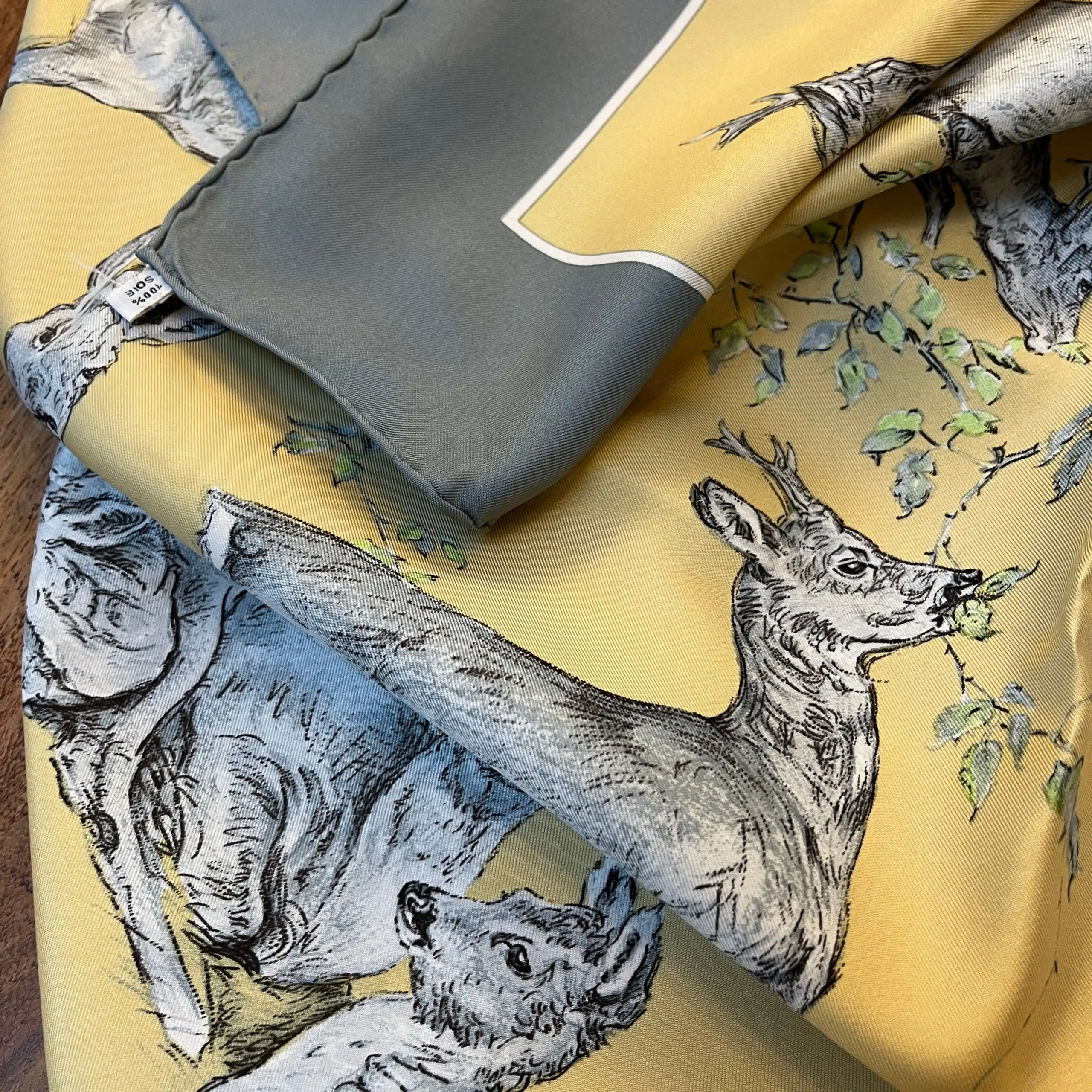
Simply incredible for a seventy-year-old scarf, you could be forgiven for believing this exquisite Hermes Carre is practically new! Retaining all its original weight and colour, there is the tiniest pulled thread, a weeny dot, and the faintest of storage lines; so we’ve had it cleaned and scored it 9.8/10.
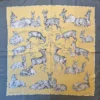
Delicate, elegant, still totally wearable, this absolutely beautiful scarf was designed by renowned artist, Xavier de Poret, way back in 1957. There has been a reissue since, but the more modern version has a copyright in the top left hand corner.
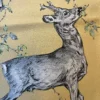
Often erroneously translated as ‘Hinds’ – which are female red deer, this scarf shows drawings of roe deer, both bucks and does, in the most extraordinary detail.
This is an extremely rare and sought after scarf, and it’s very difficult to come by.
Animalier artist, illustrator, and society portraitist, Xavier de Poret (1894–1975) was the son of a capitaine commandant of the 13th regiment of Hussars. He was raised in a château near Fontainebleau, 60 km southeast of Paris, surrounded by elegant gardens, fine horses, farm animals, aviaries full of exotic species, and the creatures of that noble forest.
It is believed that Poret could draw animals before he could write. In fact, he never attended school, instead learning literature, art, and history from his mother who recognised his talent early and brought in an instructor from l’École des Beaux-Arts. By 1914, another animalier artist wrote to him that he was as good as any of his generation. Drafted into the Dragoons during the Great War, Poret was severely wounded and his older brother killed.
In 1918, he joined the Rallye Vallière hunt club that pursued wild boar on horseback. His expanding knowledge of the chase led to illustrating articles for publications such as le Saint-Hubert.
Starting in 1930, and for the next 30 years, he accompanied hunters in Switzerland to study chamois, eagles, ibex and marmots, and portray hunters with their trophies. The black chalk and charcoal drawing, Le Chasseur Clément Geinoz, shows the rugged hunter carrying out a prize chamois, slung over his shoulder.
He illustrated mountain-hunting titles such as Joseph-Louis Reichlen’s 1938, Au Pays du Chamois, Chasse et Montagne, which sold more than 2,000 copies, as well as books on snipe and capercaillie. The same year, he began portraying horses and their owners.
Described by his son as a charming, eccentric “slave to drawing,” who preferred oil lamps and yachts, Poret married well, in 1920, to a lady with a title, Juliette d’Oncieur de la Batie. She inherited the comfortable Château de Plaisance in Riaz, Switzerland, where they settled in 1940, comfortably sitting out World War II in the peaceful paradise of the Alpine Gruyère region.
By the 1950s, the now “Le Comte Xavier de Poret” led a more mundane life, portraying the elite hunters and horses in the forest of Senlis. Soon the courts of Liechtenstein, Luxembourg, Belgium, and Austria beckoned. Perhaps the apotheosis of his career was being called to England in 1958 to paint Queen Elizabeth II on horseback, and Prince Charles and Princess Anne, each with their pony. He also painted the Belgian King Baudoin and Queen Fabiola.
Others of de Poret’s scarves typically reach even higher prices: $1,065 for les Poulinières (Broodmares); $1,400 for les Levriers (Greyhounds); and $1,725 for les Chiens de Meute (Hunting Dogs).
Other titles include les Bottes (Hunting Boots), les Renards (Foxes), les Tourterelles (Doves), les Teckels (Dachshunds), les Ecureuils (Red Squirrels), and les Mésanges (European Chickadees, or Tits). There are 19 de Poret Hermes scarves in all.
Out of stock
Related products
-

Hermes Scarf Libres Comme L’Air (Free as the Air) Spotless Collectible
£299.00 Add to cart -

Hermes Bouquets Sellier (Bouquets of Horses’ Tack) Appears Unworn
£325.00 Add to cart -

Hermes Scarf Sangles en Zigzag (Girths in a ZigZag) Pretty Lilac and Pink Appears UnWorn
£325.00 Add to cart -

Hermes La Marche du Zambeze MINT! In immaculate Original Box and Tissue with Sales Tag
£649.00 Add to cart